


From Marlborough to Korea
North Korea’s invasion of South Korea on 25 June 1950 brought New Zealand into a United Nations campaign far from home. The response reflected the Cold War conviction that communist expansion had to be resisted, alongside a desire to secure an American commitment to New Zealand’s defence.1 Naval service came first: HMNZS Pukaki and Tutira left Auckland on 3 July. Later that month, on 26 July, the government agreed to send a ground force of about a thousand men, to serve within a Commonwealth formation. The commitments extended across land and sea.42
The army contingent recruited for Korea was separate from the naval commitment. Recruiting for Kayforce was rapid, with five volunteers coming forward for each available place within five days.2 Arthur Pacey’s route to the force ran through Picton, where he had moved in 1947, aged twenty-two. He had joined the Air Force in 1944 and played for service rugby teams before representing Marlborough Māori and Marlborough. Rugby continued after he joined Kayforce: in Korea he played for Easy Troop, 163 Battery and 16 Field Regiment. His move overseas followed years in which sport and military service had already overlapped.8
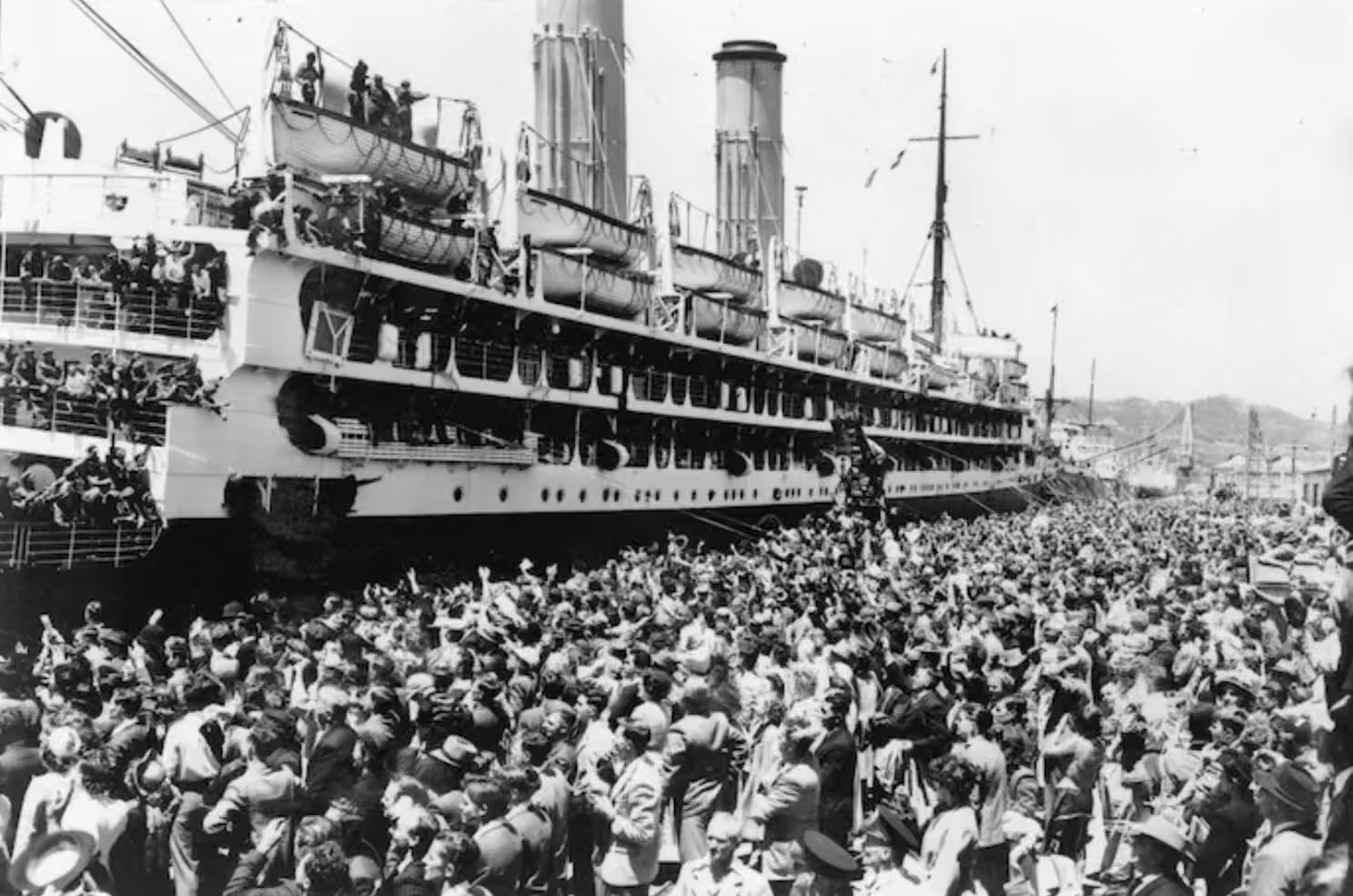
The 1,056 men of Kayforce sailed from Wellington on 10 December 1950 and reached Pusan on New Year’s Eve. On 21 January 1951 they joined the 27th British Commonwealth Infantry Brigade, entering action four days later.2 Ernest Berry, who later lived in Blenheim, remembered the same New Year’s Eve arrival. Before volunteering, he had completed two years of nursing training at Awapuni Hospital in Palmerston North and worked at Cornwall Park Hospital in Auckland. He trained at Waiouru, but his work in Korea was officially sanitation rather than a Medical Corps appointment. Wherever the artillery moved, that responsibility moved with it.7
In April 1951, the Chinese offensive brought the New Zealand gunners into the defensive battle at Kap’yong. From 23 to 25 April they supported Australian and Canadian infantry, helping check the offensive in that sector. United Nations forces subsequently withdrew in good order towards positions just north of Seoul. The regiment received a South Korean Presidential Citation for its part in the battle.2 Offshore, the frigates were sustaining another part of the campaign. Pukaki and Tutira had begun with convoy escort work, protecting the movement of personnel and supplies towards Korea.4
A campaign of guns, transport and patrols
The formation of the 1st Commonwealth Division on 28 July 1951 widened New Zealand’s responsibilities. Kayforce was expanded to 1,500 men, with a transport company and a substantial share of the division’s signallers added to the commitment. Getting the reinforcements there proved difficult: the Expansion Draft left Wellington on 2 August aboard the Wahine, which ran aground at Masela Island, north of Darwin. The men were eventually flown to Japan, and 10th Company RNZASC joined the division on 15 October. The campaign required communications and transport alongside the artillery, linking the fighting units with the organisation needed to keep them operating.3
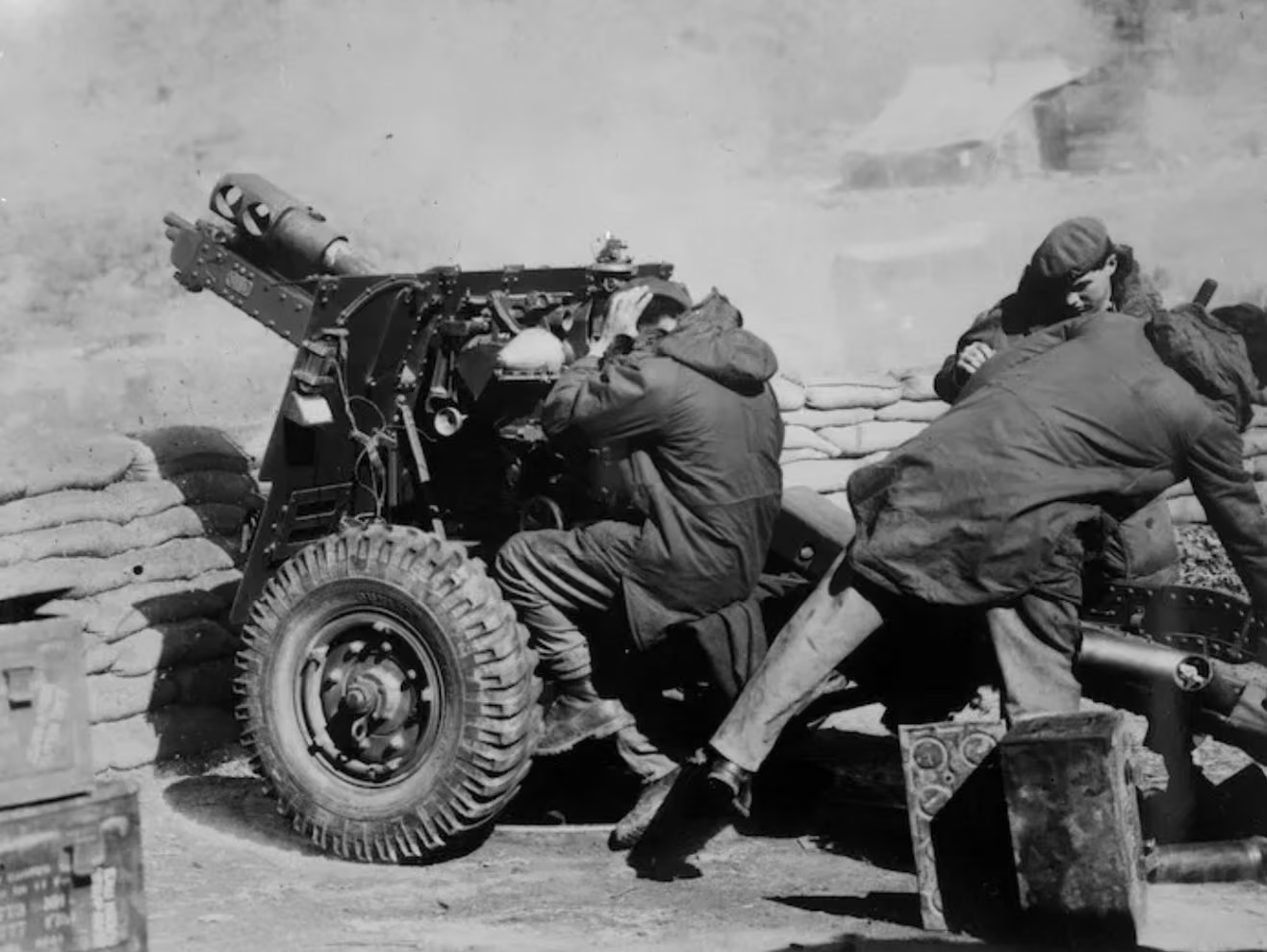
That autumn brought some of the regiment’s heaviest firing. During Operation Commando in October, Commonwealth forces advanced five to seven kilometres around the Imjin River to gain a stronger defensive line. The New Zealand guns fired 72,000 shells that month and another 10,000 on 4 November during a major Chinese attack.3 By the end of 1951, the front was settling into stalemate, but the artillery continued supporting infantry patrols, firing against enemy positions and helping repel attacks. Signallers, drivers and engineers carried on their own work behind those operations.5
Berry remembered the artillery’s earlier movements as a succession of temporary camps, sometimes occupied for days and sometimes for only a night, without a permanent home base.7
Naval duties also ranged beyond escorting convoys. Between 15 March and 7 April 1951, Rotoiti and then Tutira supervised the South Korean minesweepers YMS 502 and YMS 503; Tutira supplied their crews with fuel and food as well. Rotoiti landed a party at Sogon-Ni Point in July, supported by the ship’s guns. In February 1952, Taupo attacked troop-carrying sampans approaching Yang-Do, interrupting an attempted invasion, before sending medical personnel ashore to help casualties. Successive deployments brought all six New Zealand frigates into the conflict: Pukaki, Tutira, Rotoiti, Taupo, Hawea and Kaniere. These duties combined routine patrols with direct fighting.4
The long withdrawal and the war at home
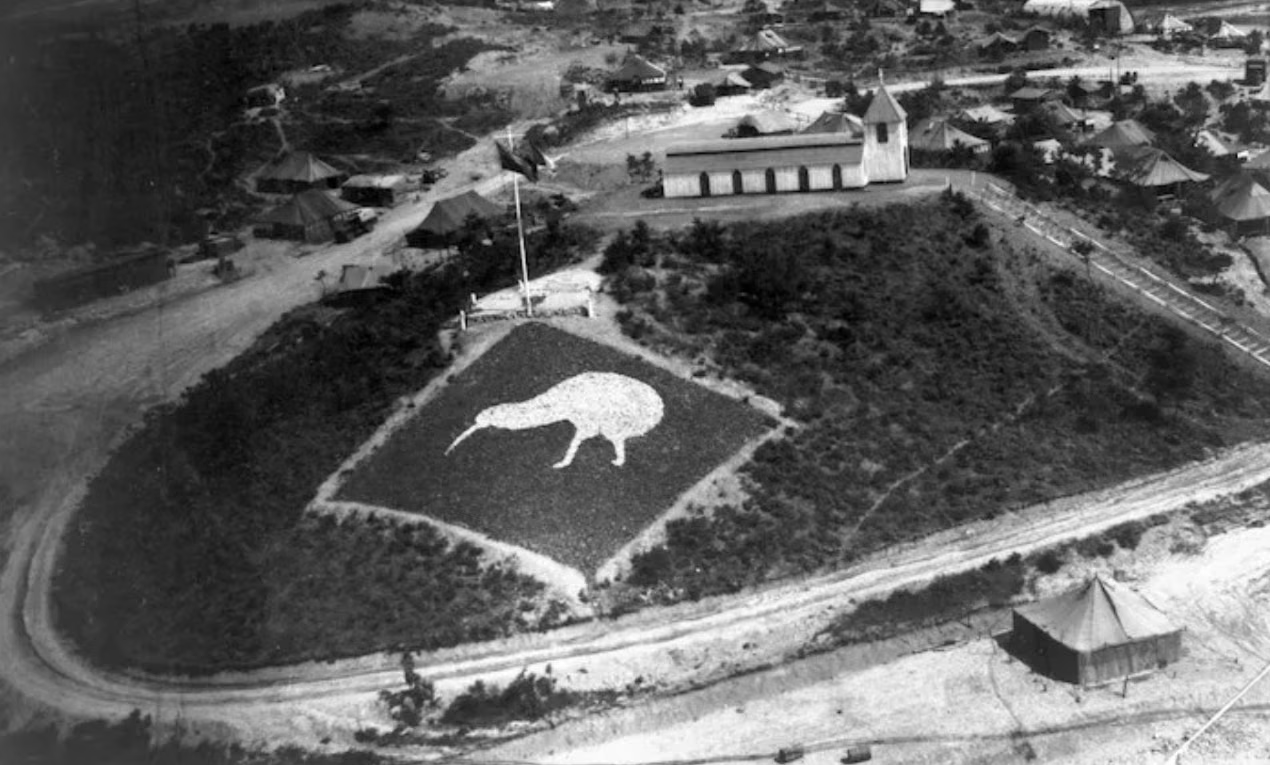
The armistice of 27 July 1953 stopped the fighting without producing a peace settlement. For New Zealand forces, it began a gradual reduction rather than an immediate departure. The gunners stayed at a camp on the Imjin River until November 1954. When the Commonwealth Division was disbanded in May 1956, 10th Company’s role ended and an 80-strong transport platoon continued with the Commonwealth Contingent. Kayforce finally withdrew on 27 July 1957, four years after the armistice. New Zealand still retained a military liaison officer in Korea until 1971. During the deployment, leave schemes had offered servicemen some relief through visits of up to three weeks to Japan.5
Across the war and the years that followed, about 4,700 men served in Kayforce and another 1,300 aboard New Zealand frigates. Forty-five died during that involvement, including 33 during the fighting.1 One Kayforce member spent eighteen months as a prisoner in northern North Korea before returning after the armistice; a New Zealander serving with the Royal Australian Air Force was also repatriated after being shot down near P’yongyang.6 Illness brought other journeys to an early end. Berry contracted Korean haemorrhagic fever and left Korea in December 1951, recalling treatment by an American medical unit and evacuation to Japan. His departure preceded the armistice by well over a year.7
At home, the war’s effects reached the economy as well as foreign policy. American purchases for strategic stockpiles drove a sudden surge in demand for wool, with New Zealand prices tripling almost overnight. The purchases were for reserves rather than uniforms specifically for Korea. Rising prices for imported raw materials offset some of the gains.6 The conflict also advanced the security objective that had helped shape New Zealand’s response in 1950. Chinese intervention created urgency in Washington, opening the way for the ANZUS Treaty signed on 1 September 1951. 16
Public attention did not remain fixed on the peninsula throughout those years. Once it became clear that the fighting would stay within Korea, interest diminished and complaints emerged that Kayforce had become a ‘Forgotten Force’.6 For veterans, however, the connection could outlast both the fighting and the withdrawal. Returning to South Korea in 2012, Berry was struck by the country’s transformation and the welcome given to visiting veterans.7 Pacey’s later life remained connected with Marlborough rugby: he played his final competition match for Moutere against Kaikōura in 1993 and continued with the Marlborough Vintage Musseleers. The same sport that linked Picton with his service in Korea remained part of his life decades afterwards.8