
Major Events in Our Past
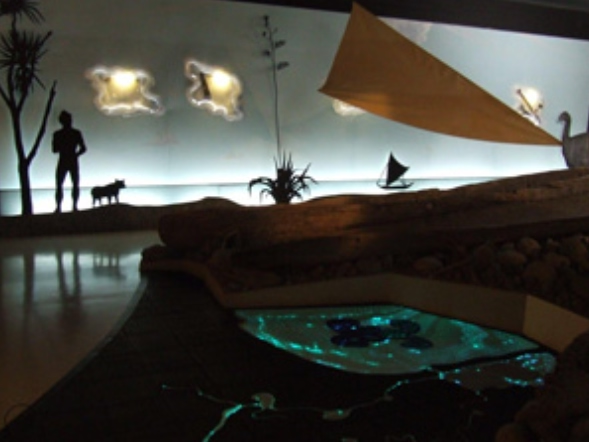 c. 1300 | Polynesian Arrival at Te Pokohiwi / Wairau BarAround 1300 AD, Polynesian navigators arrived at Te Pokohiwi / Wairau Bar, establishing one of the earliest known human settlements in New Zealand. Archaeological discoveries confirm a planned migration from East Polynesia to the resource-rich coastal lagoon, marking the beginning of tangata whenua history in Marlborough.
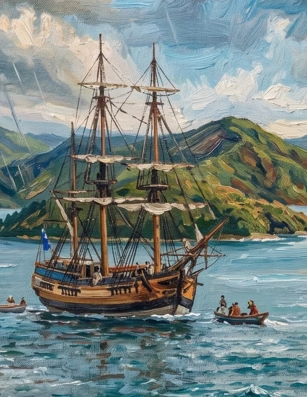 1770 | Captain Cook's First Arrival at Meretoto / Ship CoveOn 15 January 1770, Lieutenant James Cook anchored HMS Endeavour in Meretoto / Ship Cove, Tōtaranui / Queen Charlotte Sound. This marked a crucial moment of sustained European contact with Māori in the region. Ship Cove became a favoured anchorage for Cook, used on five separate occasions for repairing his ships, replenishing supplies, and observing the local flora, fauna, and Māori culture.
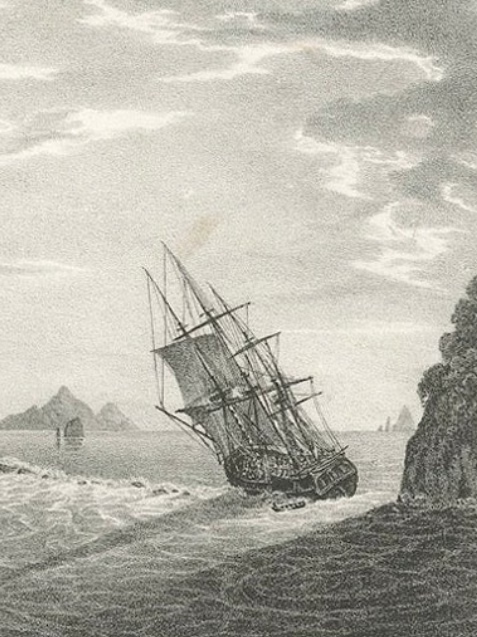 1827 | Dumont d'Urville's ExplorationFrench explorer Jules Sébastien César Dumont d'Urville, commanding the Astrolabe, carefully charted parts of the Marlborough Sounds, including Te Hoiere / Pelorus Sound. His most notable feat during this voyage was the daring navigation of the treacherous Te Aumiti / French Pass, a narrow and turbulent channel that had previously deterred explorers.
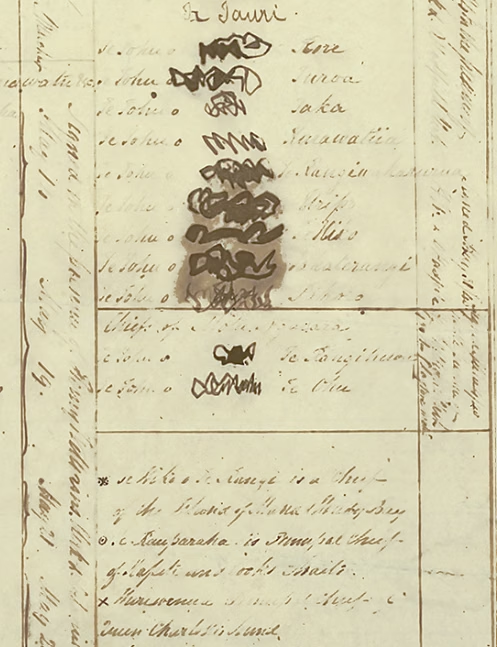 1840 | Treaty of Waitangi Signings in MarlboroughSignatures to Te Tiriti o Waitangi were collected in the Marlborough Sounds by two separate missions. Major Thomas Bunbury, aboard HMS Herald, gathered signatures in Tōtaranui / Queen Charlotte Sound in May. Missionary Henry Williams, on his schooner Ariel, collected further signatures, including from paramount chief Nohorua, at Horahora-kākahu Island and other locations in June, solidifying the Crown's presence.
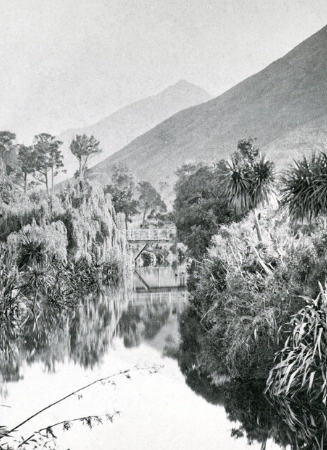 1843 | Wairau AffrayThis tragic confrontation at Tuamarina, near the Wairau River, arose from disputed land claims by the New Zealand Company. A party of Nelson settlers, led by Captain Arthur Wakefield and Police Magistrate Henry Thompson, clashed with Ngāti Toa iwi under chiefs Te Rauparaha and Te Rangihaeata. The conflict resulted in 22 European and at least four Māori deaths, significantly impacting race relations and slowing European settlement in the area for a period.
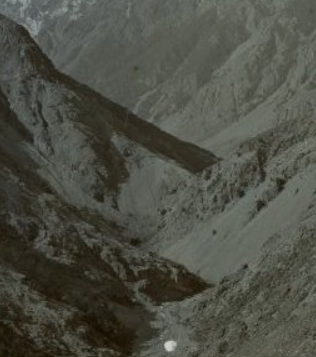 1848 | Marlborough EarthquakeA sequence of powerful earthquakes, with the main shock estimated at magnitude 7.5, struck the Awatere Valley. This seismic event caused extensive land damage, including major fault ruptures, landslides, and liquefaction. Early colonial buildings in the fledgling settlements suffered considerable damage, profoundly affecting the settlers.
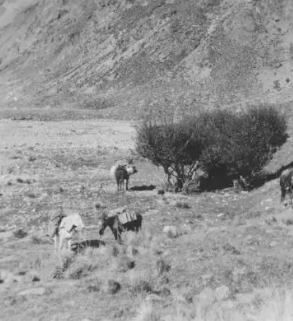 1850s | Expansion of PastoralismFollowing the Wairau Affray and the subsequent investigation which largely vindicated Māori land rights, European settlement focused on pastoralism. Pioneers like Sir Charles Clifford and Sir Frederick Weld established vast sheep stations in the Wairau and Awatere valleys. This marked the beginning of large-scale pastoral farming, which fundamentally shaped Marlborough's economy, landscape, and social structure.
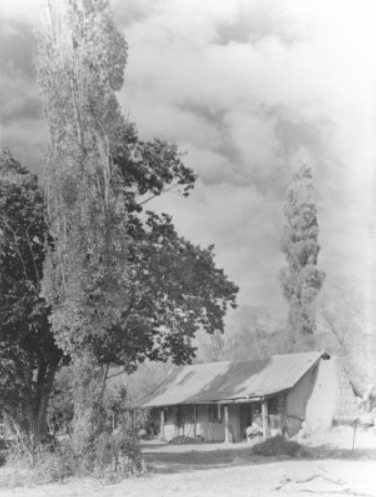 1859 | Establishment of Marlborough ProvinceDriven by dissatisfaction with perceived neglect from the Nelson provincial administration and a desire for greater local autonomy, settlers in the Wairau and surrounding areas successfully petitioned for separation. Marlborough was officially proclaimed an independent province, with Picton chosen as its initial capital, marking a new era of self-governance.
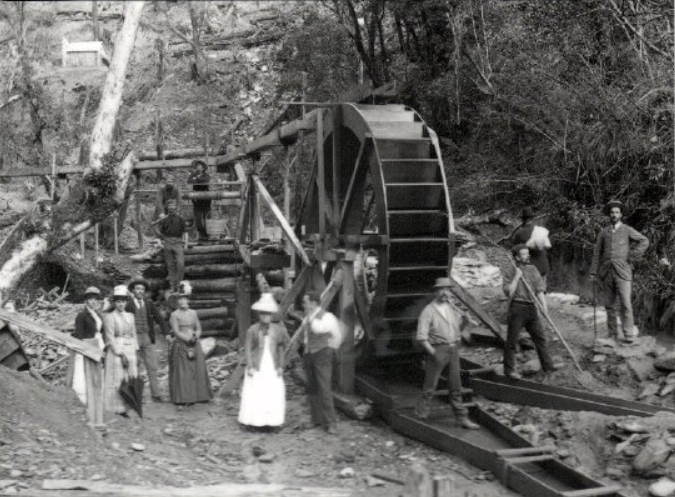 1864 | Wakamarina Gold RushThe discovery of alluvial gold in the Wakamarina Valley, a tributary of the Pelorus River, by prospectors Rutland, Harris, Wilson, and Gaukrodger sparked a significant gold rush. Thousands of miners flocked to the area, leading to the rapid growth of Havelock and Canvastown, though the easily won gold was depleted relatively quickly, the rush left a lasting impact on these settlements.
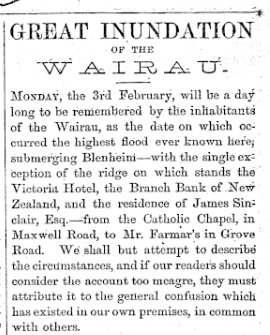 1868 | The Great Flood of MarlboroughThis was one of the most devastating floods in Marlborough's recorded history. Prolonged heavy rain caused the Wairau and Ōpaoa Rivers to burst their banks, leading to widespread inundation of Blenheim and the surrounding plains. The flood destroyed homes, bridges including the first Wairau River bridge, stock, and infrastructure, significantly altering river courses and highlighting the region's vulnerability.
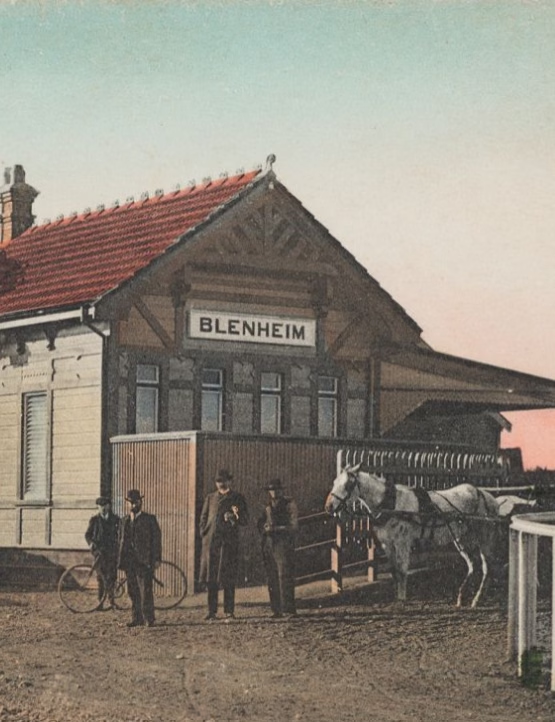 1875 | Opening of Blenheim-Picton Railway SectionThe completion of the first government railway in Marlborough, connecting the agricultural hub of Blenheim to the port of Picton, was a major milestone. This 29-kilometre line dramatically improved the transport of goods and passengers, fostering economic development and strengthening the link between Marlborough's primary town and its main sea outlet.
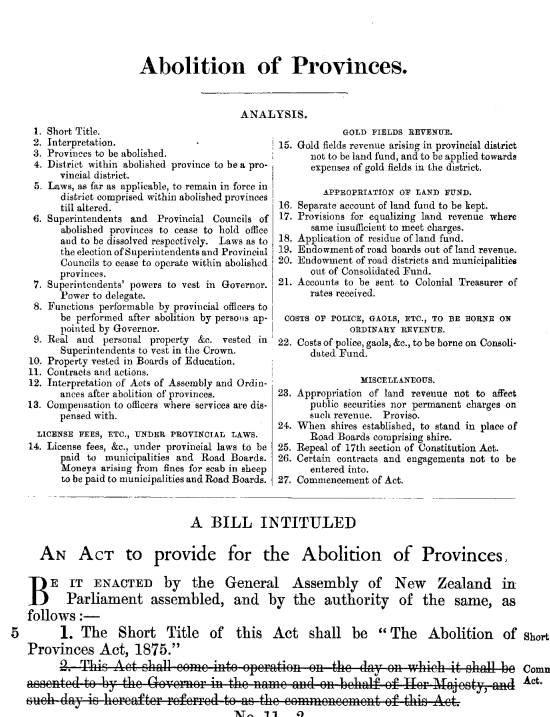 1876 | Abolition of Provincial GovernmentNew Zealand's system of provincial government, which had been in place since 1853, was abolished. Marlborough, like the other eight provinces, ceased to exist as a separate political entity, and its functions were absorbed by central government and newly formed local bodies like county and borough councils.
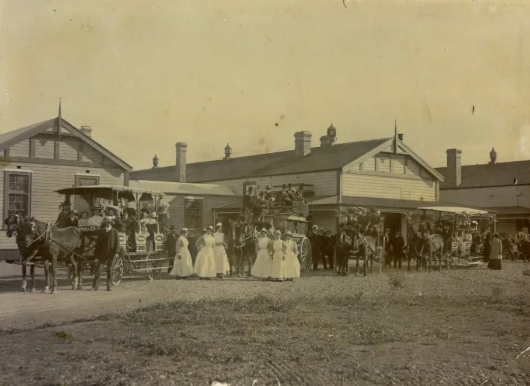 1918 | Influenza PandemicThe global Spanish Influenza pandemic reached Marlborough with devastating effect. The disease spread rapidly through the community, overwhelming local medical services and resulting in significant loss of life. Temporary hospitals were set up, and the event left a lasting scar on the region's collective memory.
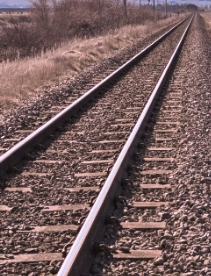 1945 | Completion of the Main North Line (1945)A monumental engineering achievement, this event saw the first through-train run from Christchurch to Picton, closing the Kaikōura coast gap and connecting Marlborough to the South Island rail network.
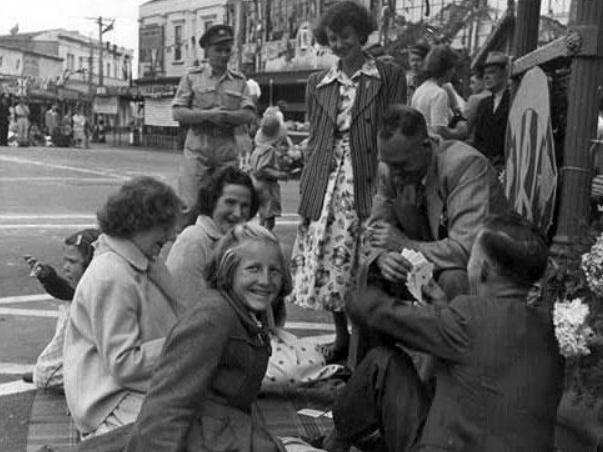 1954 | Queen Elizabeth II's VisitDuring her 1953-54 coronation tour of New Zealand, Queen Elizabeth II visited Blenheim. This was a momentous occasion for the region, with large crowds gathering to catch a glimpse of the young monarch. Royal visits were significant events in mid-20th century New Zealand, reinforcing ties to the British Crown.
 1979 | Farmers Cooperative Department Store FireOn 10 January 1979, a devastating fire destroyed the Farmers' Co-operative Association department store on Queen Street in Blenheim. Driven by intense summer heat and strong winds, the blaze was the largest in Blenheim's history, forcing a significant rebuild of the town's commercial centre.
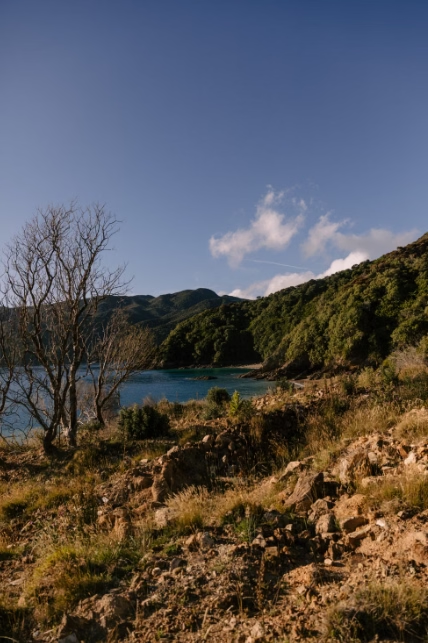 1980s | Development of the Queen Charlotte TrackThe establishment of the Queen Charlotte Track and other walking tracks in the Marlborough Sounds opened up the region's stunning natural beauty to hikers and outdoor enthusiasts. This marked a shift towards tourism and recreation as significant economic activities, showcasing the Sounds' world-class scenery.
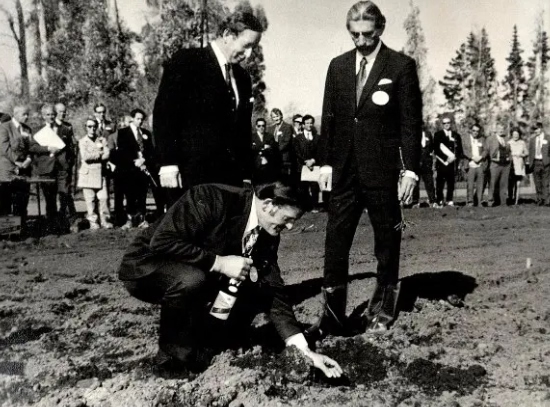 1980s–1990s | Marlborough Wine Industry BoomThe rapid expansion of viticulture in Marlborough, particularly Sauvignon Blanc, transformed the region's economy and landscape. Pioneering plantings in the 1970s led to global recognition, with Marlborough becoming New Zealand's largest wine region and an international benchmark for the varietal.
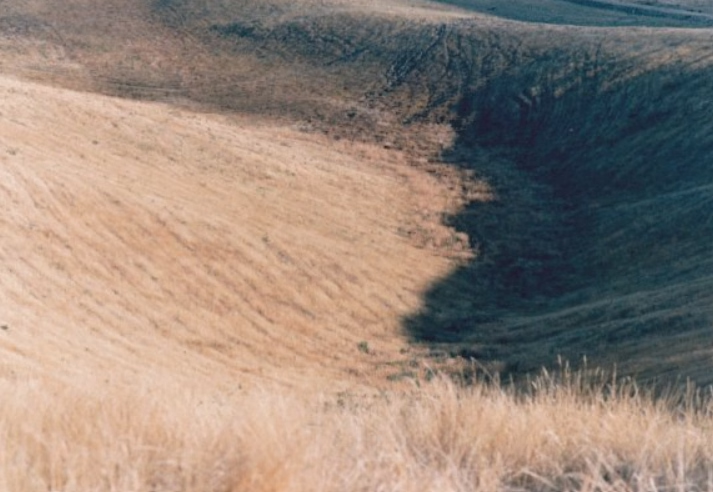 2000 | Wither Hills Boxing Day FireOn 26 December 2000, a major wildfire broke out on the Wither Hills south of Blenheim. Driven by intense heat and gale winds, the blaze burned over 6,000 hectares of farmland, forest, and pasture across four days, becoming one of the largest rural fires in regional history.
Copyright, Disclaimers, and Acknowledgements
Image usage rights & attributions: DUMONT D'URVILLE'S EXPLORATION: Photo: Painting - 'Astrolabe In French Pass' by Louis Auguste de Sainson. TREATY OF WAITANGI SIGNINGS: This image is sourced from Archives New Zealand - Te Rua Mahara o te Kāwanatanga - Ref: IA9/9. The image is covered by Crown Copyright, and the Creative Commons 2.0 license found here. WAIRAU AFFRAY: This image is a cropped version of the image sourced from Auckland Council Libraries Heritage Collections (Old Colonists' Museum Collection) 5-0940A. No copyright restrictions are known, but an attribution is appreciated where the content is reused in part or in full. MARLBOROUGH EARTHQUAKE: This image is sourced from Auckland Council Libraries Heritage Collections AWNS-19110216-15-02. No copyright restrictions are known, but an attribution is appreciated where the content is reused in part or in full. OPENING OF BLENHEIM-PICTON RAILWAY SECTION: This image is sourced from Te Papa Online Photography Collection - Object ID: 327699. Production: Muir & Moodie; photography studio; 1906-1915; Blenheim. No copyright restrictions are known, but an attribution is appreciated where the content is reused in part or in full.
All media on this page should be assumed to be owned by or licensed to the Goodwin & Associates unless specific caption or disclaimer section notes state otherwise. Because unlabelled public domain material exists across our archives, please verify rights independently before reusing any image or asset. Additional details are available in our Terms and Conditions.